Umeshu Made With Dark Rum: What Changes When You Drop the White Liquor
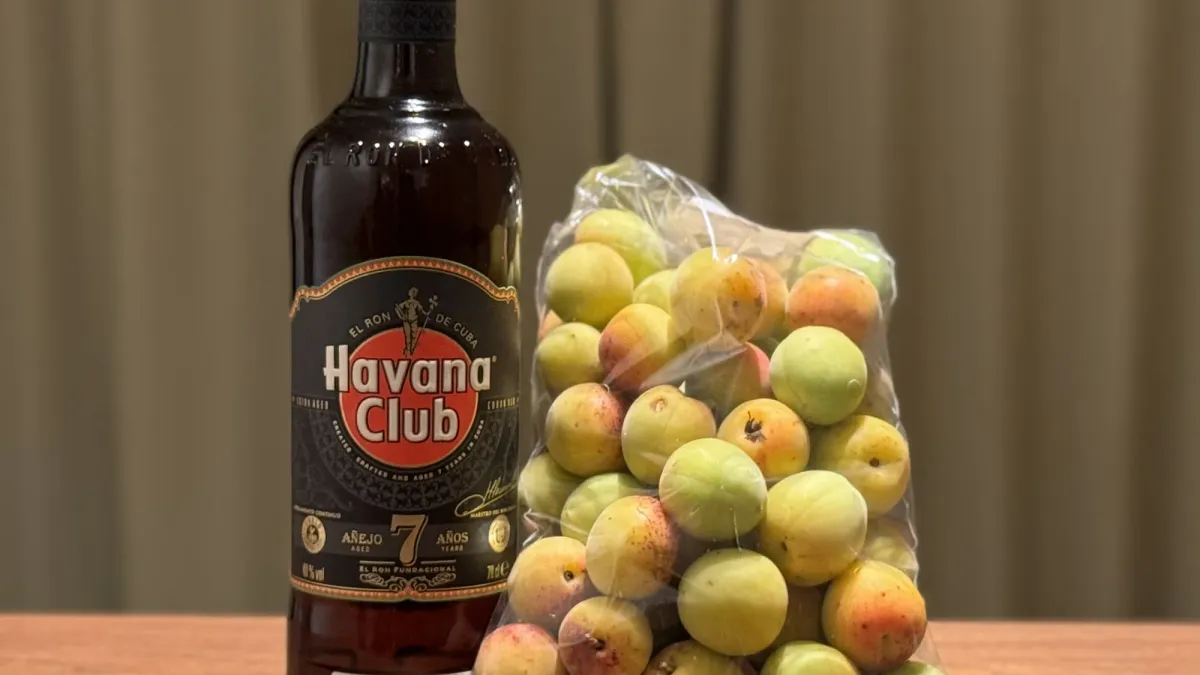
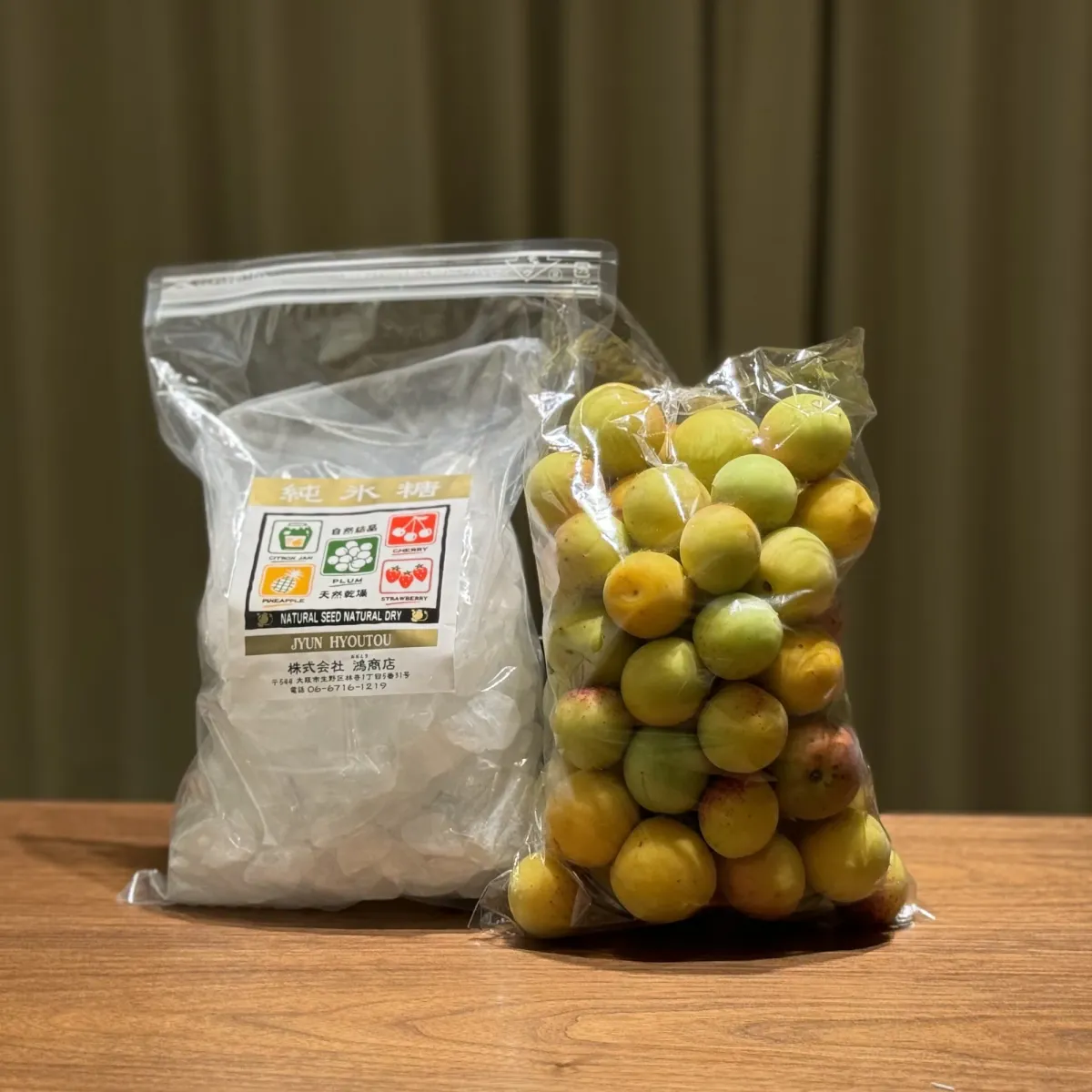
Every June, supermarkets here fill with green plums that nobody eats raw. They are hard as golf balls, sour enough to be unpleasant, and mildly toxic before they are processed. You buy them anyway, because they are the raw material for the one piece of Japanese home preserving that almost never fails: umeshu, plum liqueur.
I have made it in two very different ways. The first time was 2016, with plums a colleague handed me at work and the cheap neutral spirit every Japanese recipe calls for. The second was 2024, with aged dark rum, on the advice of a bartender.
The two jars taste nothing alike. This is what I learned in between.
The short version
Both of my batches used the same fruit and the same sugar. Only the spirit changed.
| 2016 — white liquor | 2024 — dark rum | |
|---|---|---|
| Ume | 1 kg | 1 kg |
| Rock sugar | 1 kg | 1 kg |
| Spirit | 1.8 L white liquor | 1.5 L aged dark rum |
| Jar | 4 L | 4 L |
- Green, unripe ume, rock sugar, and a spirit of 20% ABV or higher. Nothing else.
- The 2016 column is not my invention. 1 kg of ume, 1 kg of rock sugar, 1.8 L of white liquor, in a 4-litre jar is the standard Japanese recipe — it is what the big producers print, and what you will find on a card next to the plums in any supermarket in June.
- Equal weights of fruit and sugar is the sweet end of the normal range. Dry versions go down to 400–800 g of sugar per kilo of plums, and both are considered correct.
- 1.8 litres is not an arbitrary number. White liquor is sold here in 1.8 L bottles — one shō, the old Japanese unit — specifically for this season. Every recipe says 1.8 L because that is what one bottle holds.
- Store it somewhere dark at room temperature. No refrigeration, no sunlight.
- It is drinkable at three months and good at a year.
- The spirit is not a neutral detail. It is most of the finished flavour.
Why unripe plums, and why it matters more than the recipe
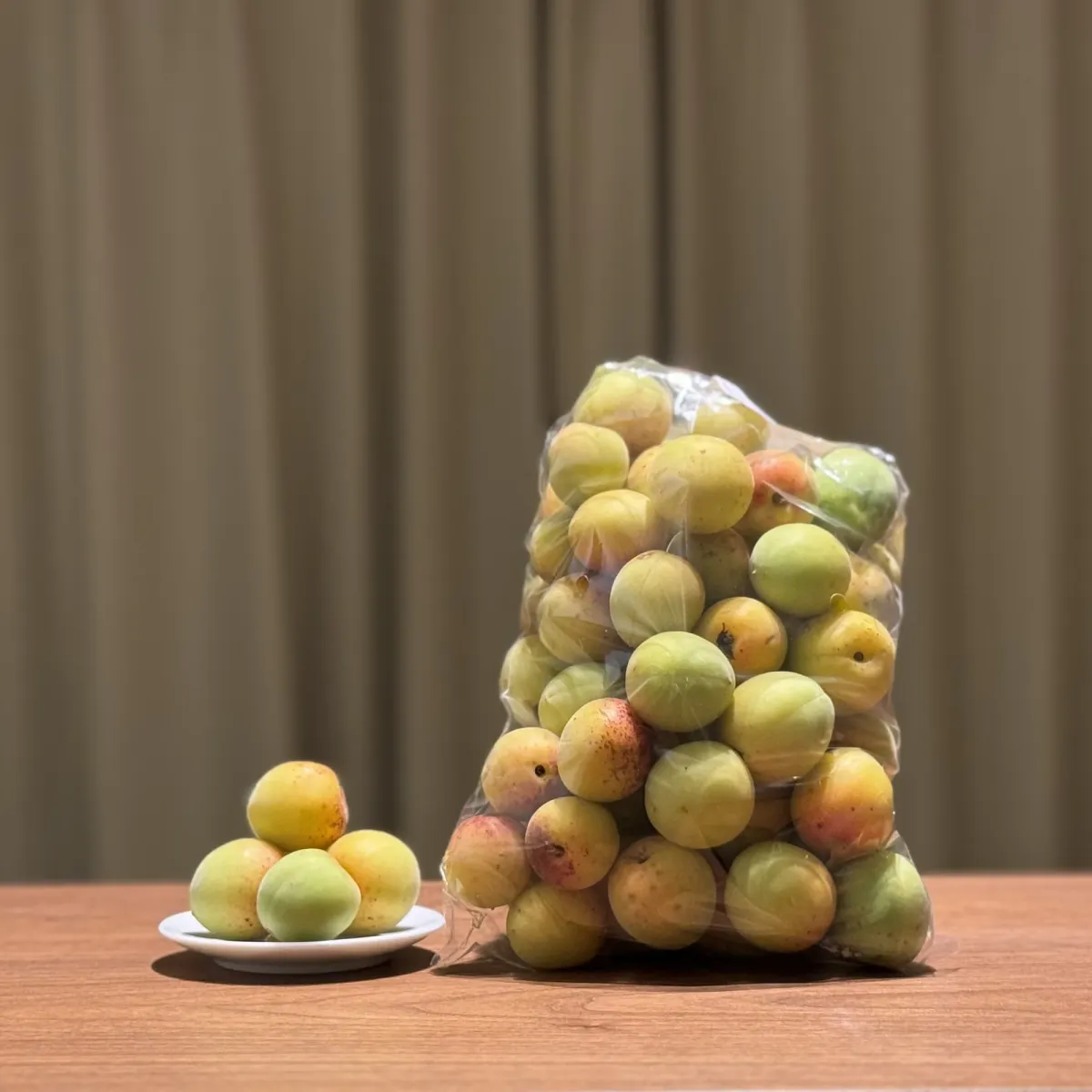
Ume for umeshu should be picked green and hard. Ripe yellow ume are for umeboshi and for syrup, where softness helps; in alcohol, a ripe plum collapses and clouds the jar.
This is the part English recipes tend to skip, and it is the part that decides whether your jar is clear or murky a year later. If your plums have started to yellow and soften, you are not making umeshu any more — you are making something else, and you should switch to salt or sugar instead.
Ripeness and damage are two different problems
They get muddled together in most recipes, and they should not be.
Ripeness disqualifies a plum. A soft yellow ume will fall apart in alcohol, and there is nothing to do about it except make syrup or umeboshi with it instead.
Damage does not. Out of a kilo, I usually find around 5% with a bruise, a split, or a brown spot. I cut the bad part away and put the rest of the fruit in the jar. It has never caused a problem — the alcohol is doing the work, and a trimmed plum is still a hard green plum.
So sort for firmness first, and only then look at the skin. Throwing out a perfectly good plum because it has a mark on it is the beginner’s mistake in the opposite direction.
The alcohol rule nobody outside Japan explains
In Japan, making umeshu at home is legal, but only under conditions written into the liquor tax law. The one that matters for the finished drink: the spirit has to be at least 20% ABV.
Brewing alcohol at home without a licence is an offence here. Steeping fruit in an already-taxed bottled spirit is carved out as an exception, under three conditions:
- The base spirit must be at least 20% ABV and already taxed — meaning a bottle bought normally at a shop.
- Certain things may not be steeped. Rice, wheat, millet, corn, sorghum, barnyard millet, starch or their kōji; grapes (including wild grapes); and amino acids, vitamins, organic acids, colourings, flavourings and lees. Ume is not on the list. Neither is sugar.
- It has to be for you. Yourself and the people you live with. You may not sell it.
That last one is why you almost never see genuinely homemade umeshu in a Japanese restaurant without paperwork behind it — and the grape clause is why nobody here makes wine at home. (Brandy is fine as a base, incidentally: the restriction is on what you add, not on what the spirit was distilled from.)
That 20% threshold is not bureaucratic fussiness. Below roughly 20%, the water drawn out of the fruit dilutes the jar far enough that it can ferment or spoil instead of macerating. It is the reason Japanese recipes default to white liquor (ホワイトリカー) at 35% — high enough to be safe with a wide margin, cheap, and completely neutral.
So the practical rule for a reader outside Japan is simple: anything 35–40% will work. Vodka, a plain shochu, a light rum, brandy. What will not work is wine, sake, or a low-proof liqueur.
Both of the batches below were made with spirits well over that line.
Attempt one, 2016: white liquor, exactly by the book
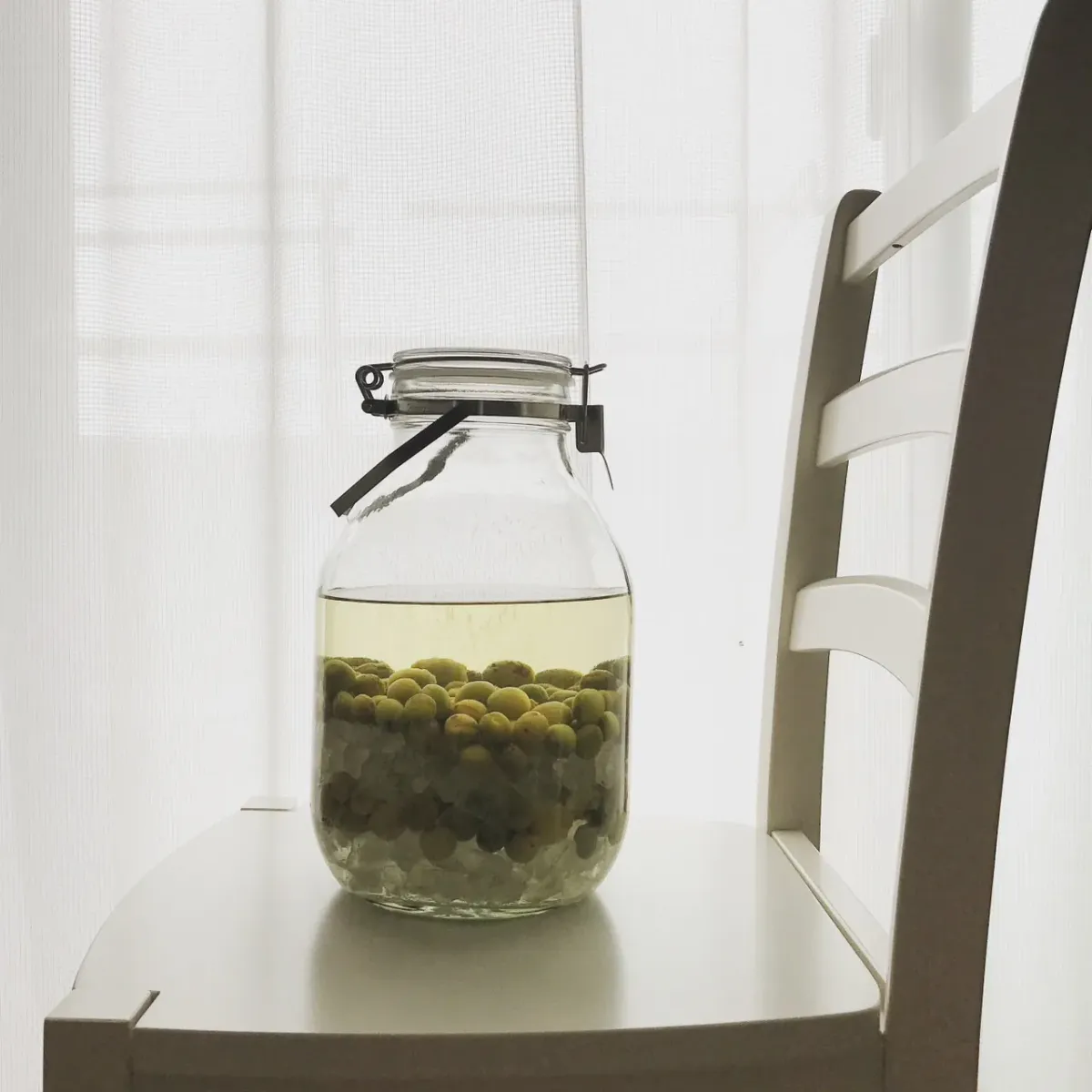
This is the standard version, and it is the right place to start. Neutral spirit, rock sugar, green plums, a clip-top jar, a dark cupboard.
What is worth noticing is the colour. On day one there is none. Over the following months the liquid pulls colour out of the plums and slowly turns amber. With white liquor you can read the progress of the extraction directly off the jar, which makes it an unusually satisfying first project.
The thing that made me keep doing it
What I remember from that first jar is not the method — the method is easy — but what it tasted like when it was finally ready.
It tasted the way umeshu tastes in a bar here: clean, light, uncomplicated. That much I expected. What I did not expect was the fragrance sitting underneath it — bright and almost floral, coming off the fruit itself. I had drunk umeshu for years without ever noticing it. It is apparently the first thing to go when a bottle is made at scale.
That was enough to make it a habit. Since 2016 I have made something out of ume every June, and the only years I have missed are the ones where work made it impossible.
When to take the plums out
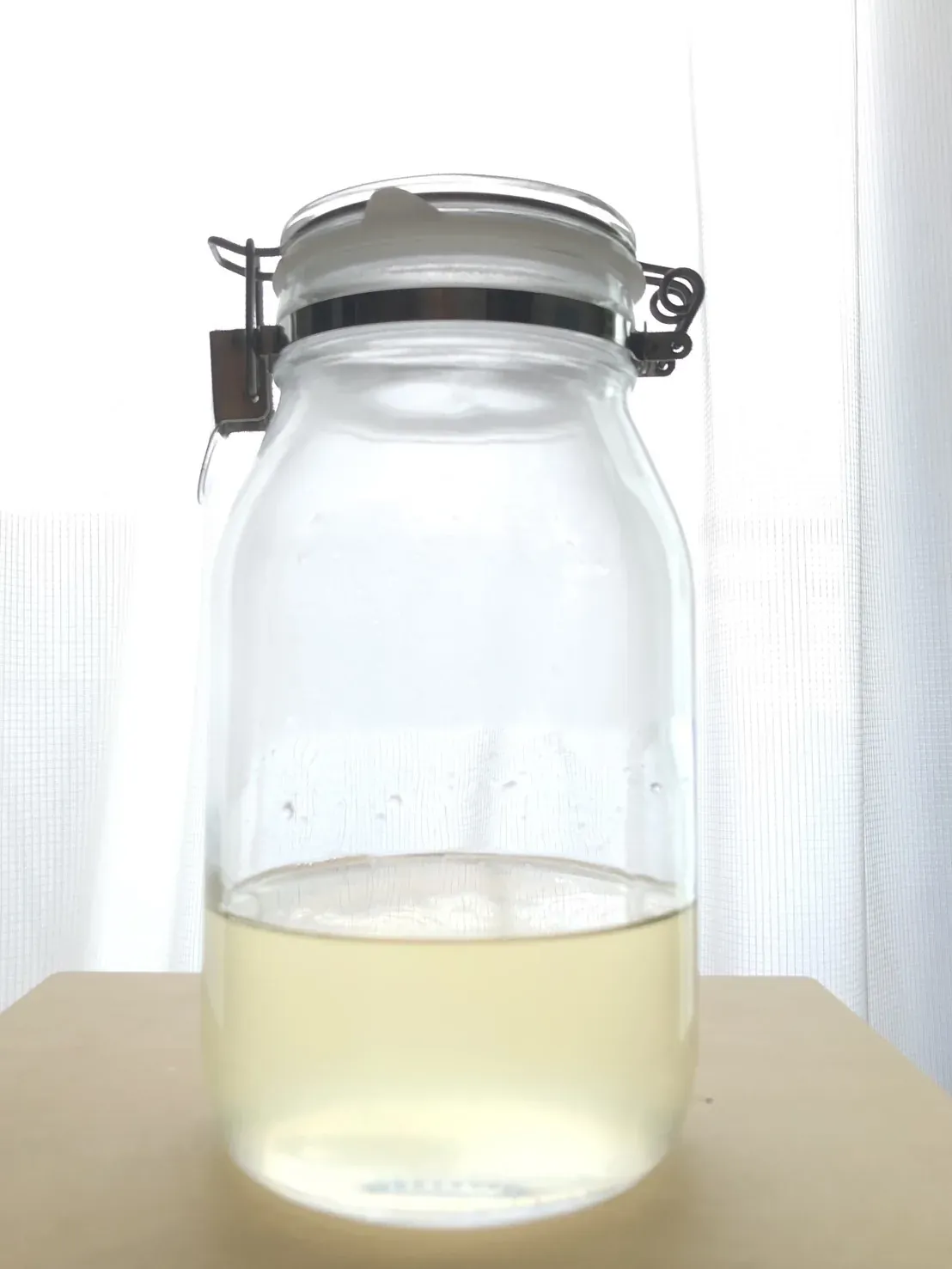
English recipes do cover this, but the numbers they give are all over the place — three months in one, a full year in another — and none of them say what you are choosing between. Leaving the fruit in indefinitely is not dangerous, but past a point the plums stop giving and start taking: the liquid picks up a slightly bitter, woody note from the stones.
I take mine out at six months.
The figure quoted most often in Japan is about a year, and leaving the fruit in that long is a legitimate choice — the Japanese producers who write about this say a longer steep rounds the drink out and softens its edges. But they also agree that most of what the fruit has to give is already in the liquid within about three months, and that past a point you start pulling a rough, bitter note out of the stones. Six months is where I have settled between those two.
If you are unsure, taste it. That is the actual answer, and it is the one the Japanese sources give too.
And do not throw the plums away. I strip the flesh off the stones and cook it down into jam — dark, sour, faintly alcoholic, very good on toast, and not something you can buy. It is the second product of the same jar, and it is the reason six months does not feel early to me: the fruit still has enough body left in it to be worth cooking.
Attempt two, 2024: dark rum, on a bartender’s advice
A bartender once told me that dark rum makes a fundamentally different umeshu — that where white liquor gives you the plum and nothing else, an aged rum brings its own body underneath it. I finally tried it in 2024, with a seven-year Havana Club.
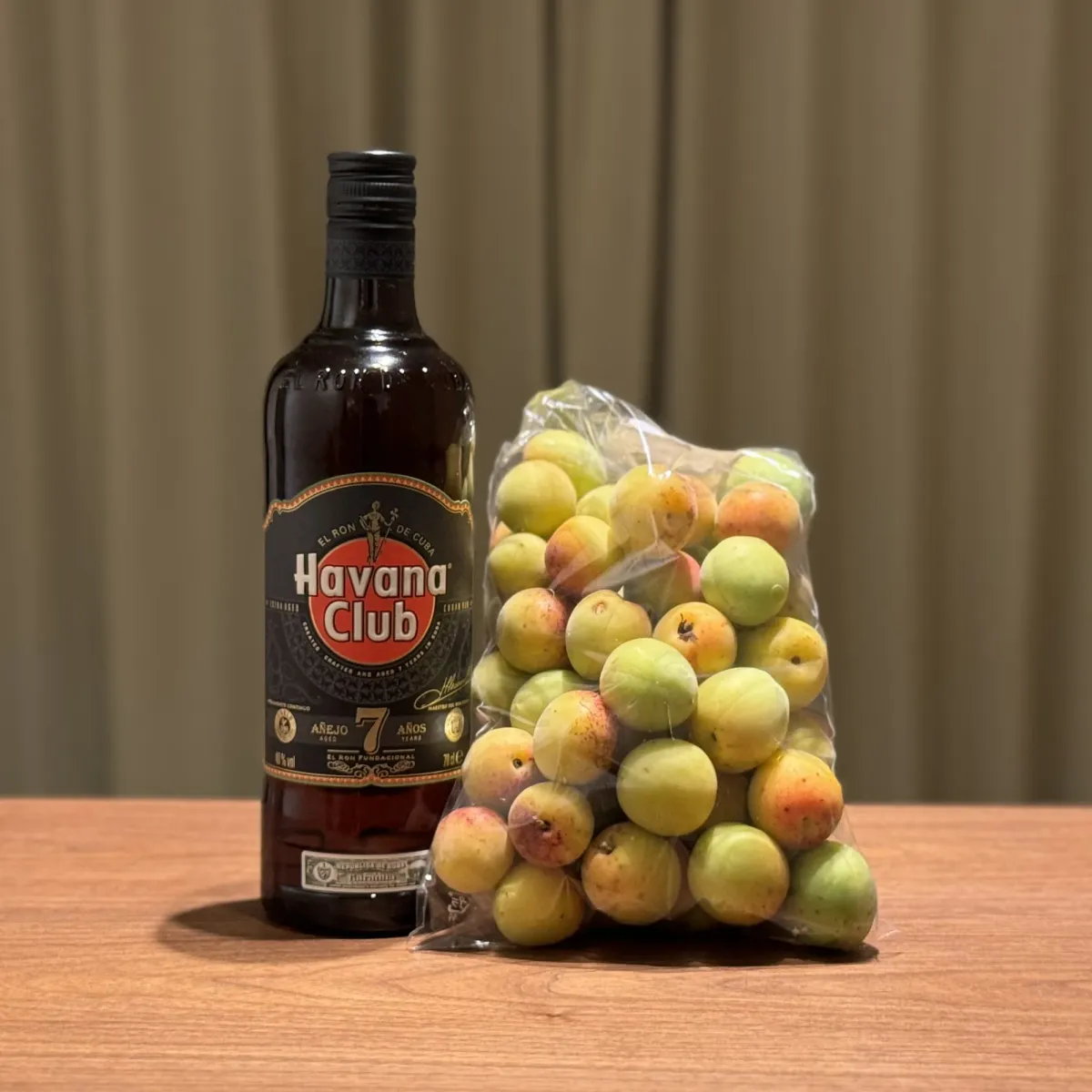
The first thing you notice is that the visual feedback disappears.
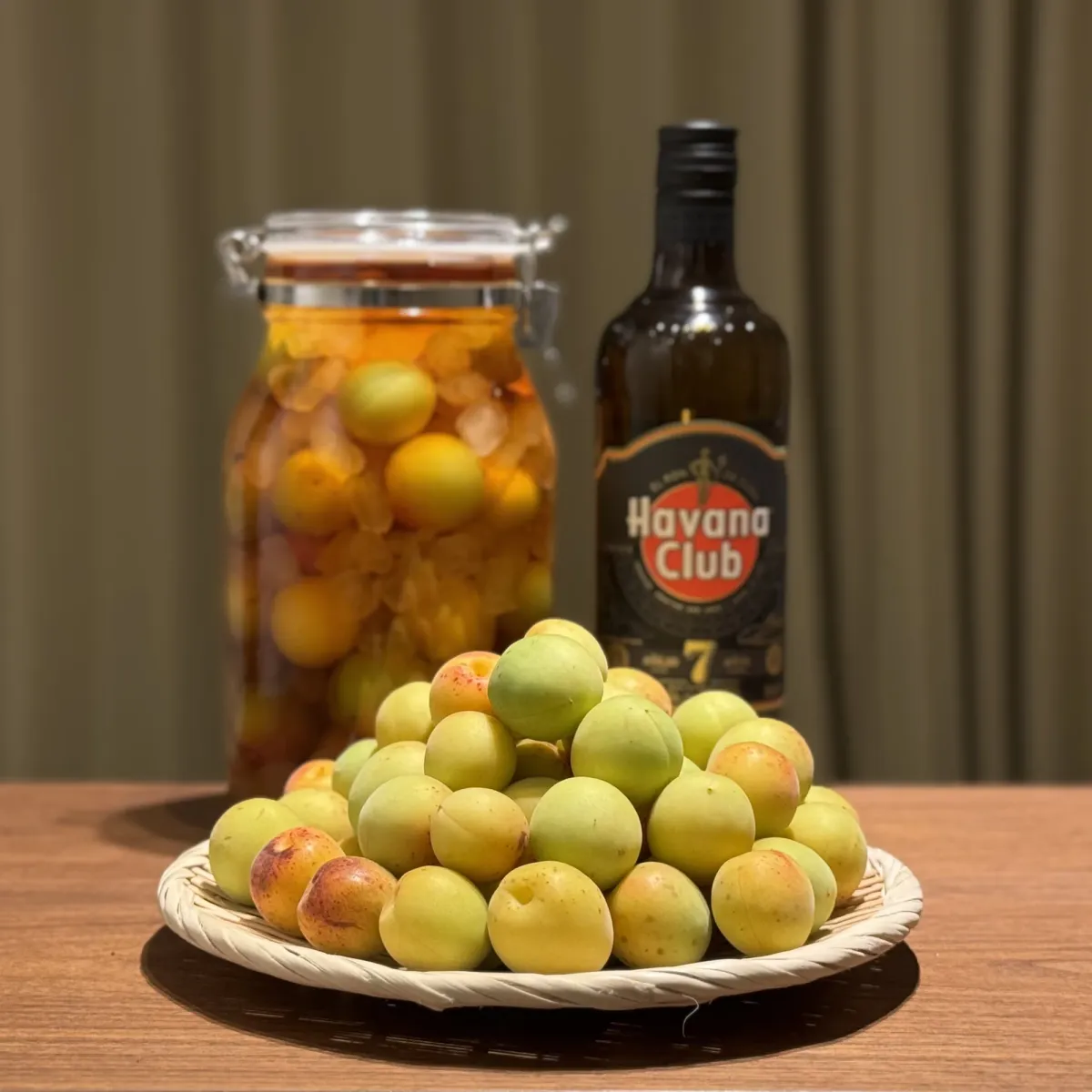
With white liquor, colour is your clock. With dark rum, the jar looks done on the first evening and looks identical three months later. You have to go by time and by taste.
The result is worth it, and it is not a subtle difference.
Where the white liquor version is clean and steps out of the way, the rum version has kokutō in it — the dark, unrefined cane sugar from Okinawa. That is the closest thing I can point at. There is a dense, almost syrupy weight underneath the sourness that the neutral spirit version simply does not have. It is not sweeter. It is heavier.
It also wants to be drunk differently. The white liquor version is good long, cut with soda, in the middle of a hot afternoon. The rum version I drink over ice and nothing else — and at that point it stops being a summer cordial and turns into something you sip at the end of a day.
If you want to try this
- Use an aged rum, not a white one. A white rum behaves like white liquor with extra cost.
- Do not cut the sugar. It is tempting to, because the rum reads as sweet on its own. I kept it at the standard 1:1 and would do the same again — the weight the rum adds is not sweetness, and taking sugar out to compensate for it would leave the jar sour and thin.
- The volume has some slack in it. Rum does not come in 1.8 L bottles, so I used 1.5 L to the same kilo of fruit. As long as the plums are covered, you are fine.
- Brandy is the standard variation here, not rum — it is the one the Japanese ume producers themselves write guides about, and it gives you barrel notes and a deeper amber colour. Whisky, sake and shochu are all used too. Rum is the less-travelled road, which is exactly why I wanted to try it.
All three at once: what June actually looks like
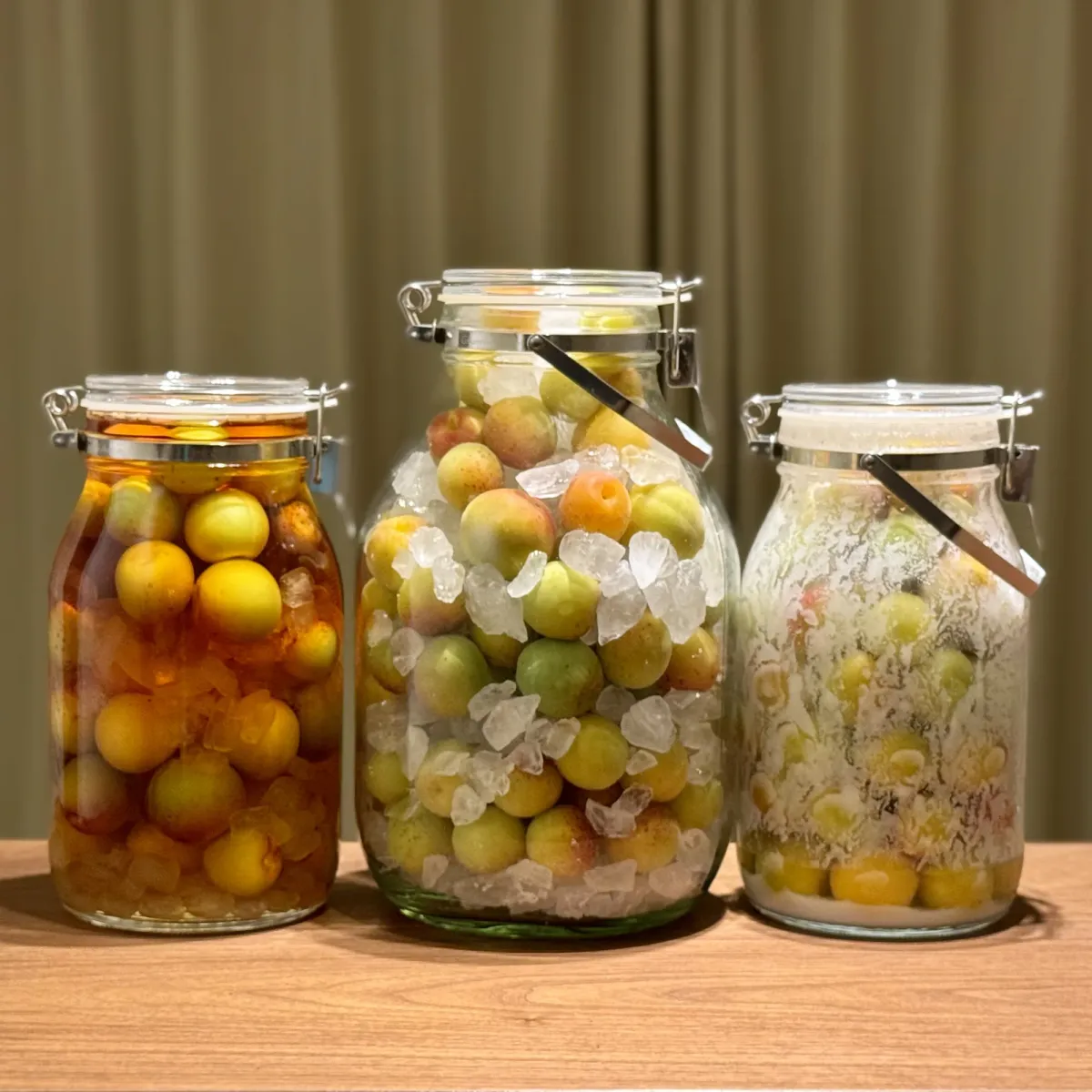
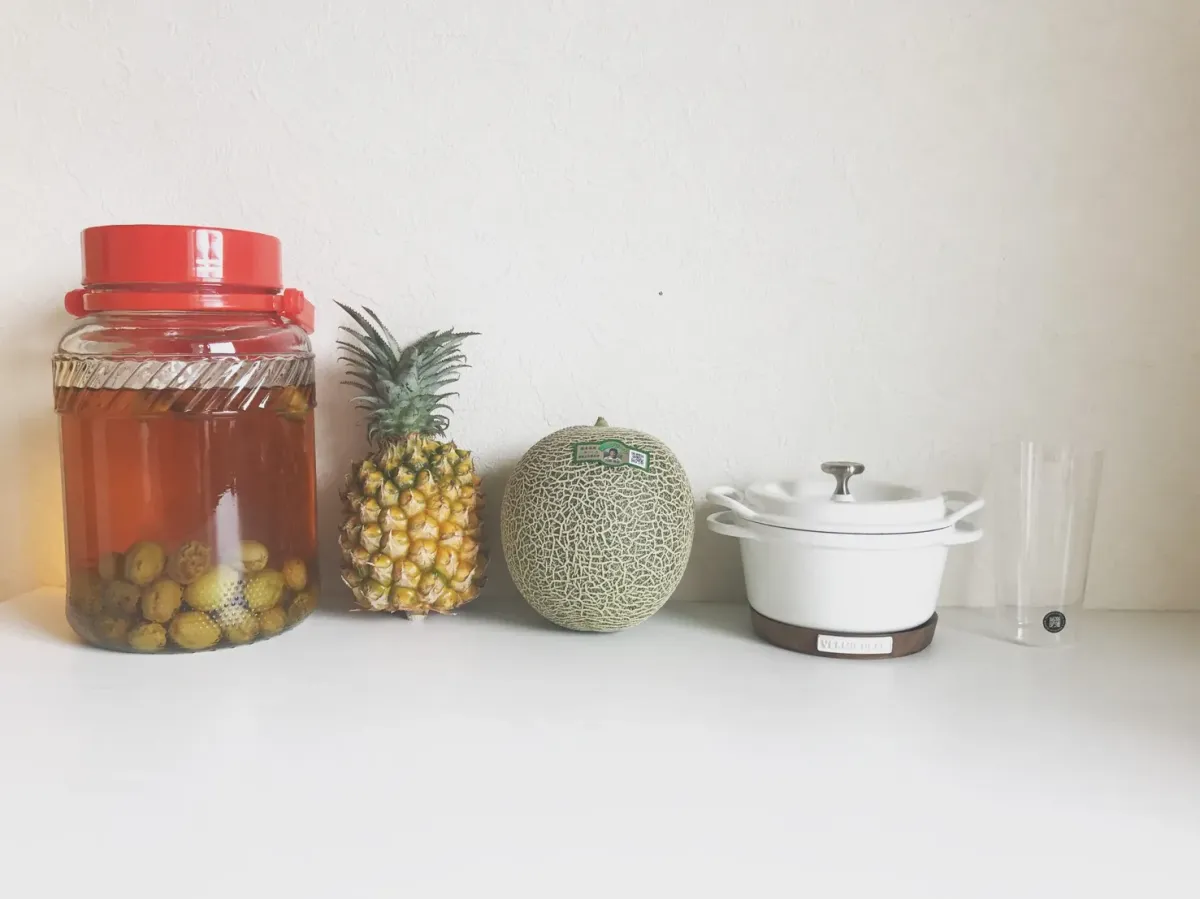
Ume season is short — a few weeks — and the plums do not wait. So the practical thing is to buy more than you need for one project and split them across jars in a single evening. All three of these were started within a couple of hours of each other.
The three diverge immediately after that. The rum jar goes in a cupboard for a year. The sugar jar needs shaking every day for two weeks. The salt jar needs to be watched, and then dried in the sun in July.
The no-alcohol version
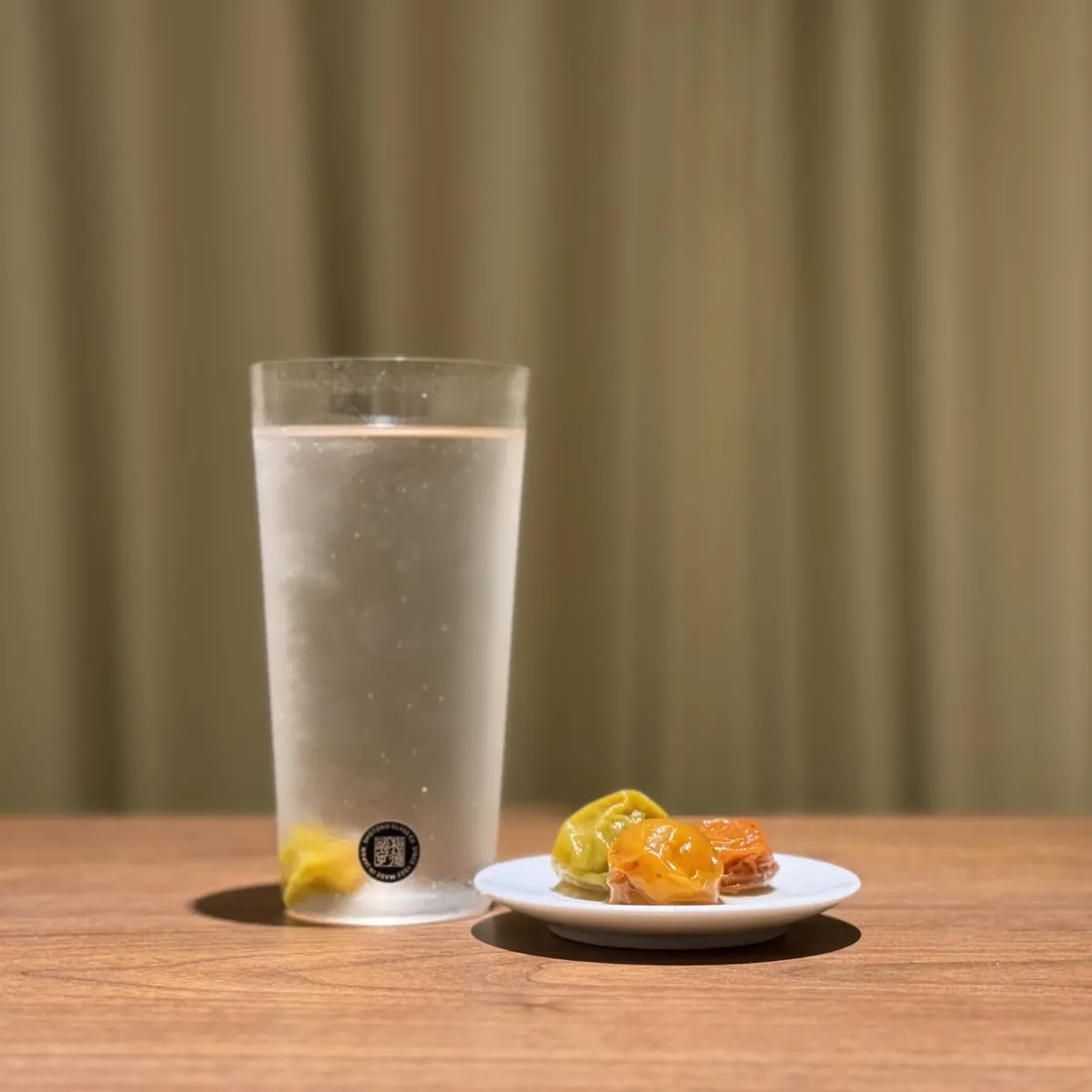
If you cannot or do not want to use alcohol, the same fruit makes ume syrup, and the method is nearly identical: plums and rock sugar, no spirit at all.
It is ready in about two weeks rather than a year, and it is what most Japanese households actually drink through the summer, cut with cold water or soda.
Getting ume outside Japan
This is the part where a Japanese recipe stops being useful, so it is worth being specific.
Ume is not a plum. Prunus mume is its own species, botanically closer to an apricot than to anything in a supermarket plum section. A hard green supermarket plum is not a substitute.
Unripe green apricots are the swap you will see recommended in English, and people do report good results. I have never made it that way, so treat that as someone else’s experience rather than mine — but it is the substitute worth trying if ume are genuinely out of reach.
The American season is not the Japanese one. In Japan, ume come in during June. In California, where most of the US crop grows, they are picked from mid-May into early June — and the window is only about two weeks. If you wait for the Japanese calendar you will miss it entirely.
Where people actually get them in the US:
- Japanese and Korean grocery stores, in season. Ask at the counter, because ume often do not make it out to the shelf.
- Weee!, the Asian grocery delivery service, ships nationwide and lists fresh ume by the pound during the season. Out of season the listing simply goes dark, which is a useful way to tell whether the season has started.
- Small California growers. Kudo Farms sells organic ume by the 10 lb box and ships to the lower 48. Nicholas Family Farms takes orders for green ume directly. Good Eggs carries organic ume from Fruit World.
- Farmers’ markets in areas with a Japanese-American community.
Set a reminder for late April and start asking then. This is a fruit you have to plan for.
I should be clear that I have not bought from any of these myself — I live in Japan and buy mine in a shop. Treat the list as signposting rather than a recommendation. Just One Cookbook’s guide to ume plums is the most thorough English source I found on where they actually turn up in the US, and it is where I checked most of this.
What I would tell a first-timer
- Buy hard green plums. Reject the soft ones; trim the bruised ones and use them.
- Use a spirit at 35% or over. If you only have one jar’s worth of curiosity, use a neutral one — you will learn more from watching the colour arrive.
- Sterilise the jar and dry it completely. Water is the only real enemy here.
- A dark cupboard at room temperature. That is the whole storage question.
- Write the date on the lid. You will not remember.
- Take the fruit out at six months and make jam with it.
- Make the second jar with something interesting. That is where it stops being a recipe and becomes yours.
Related
- Umeboshi without a weight — the salt jar from the same June, day by day